
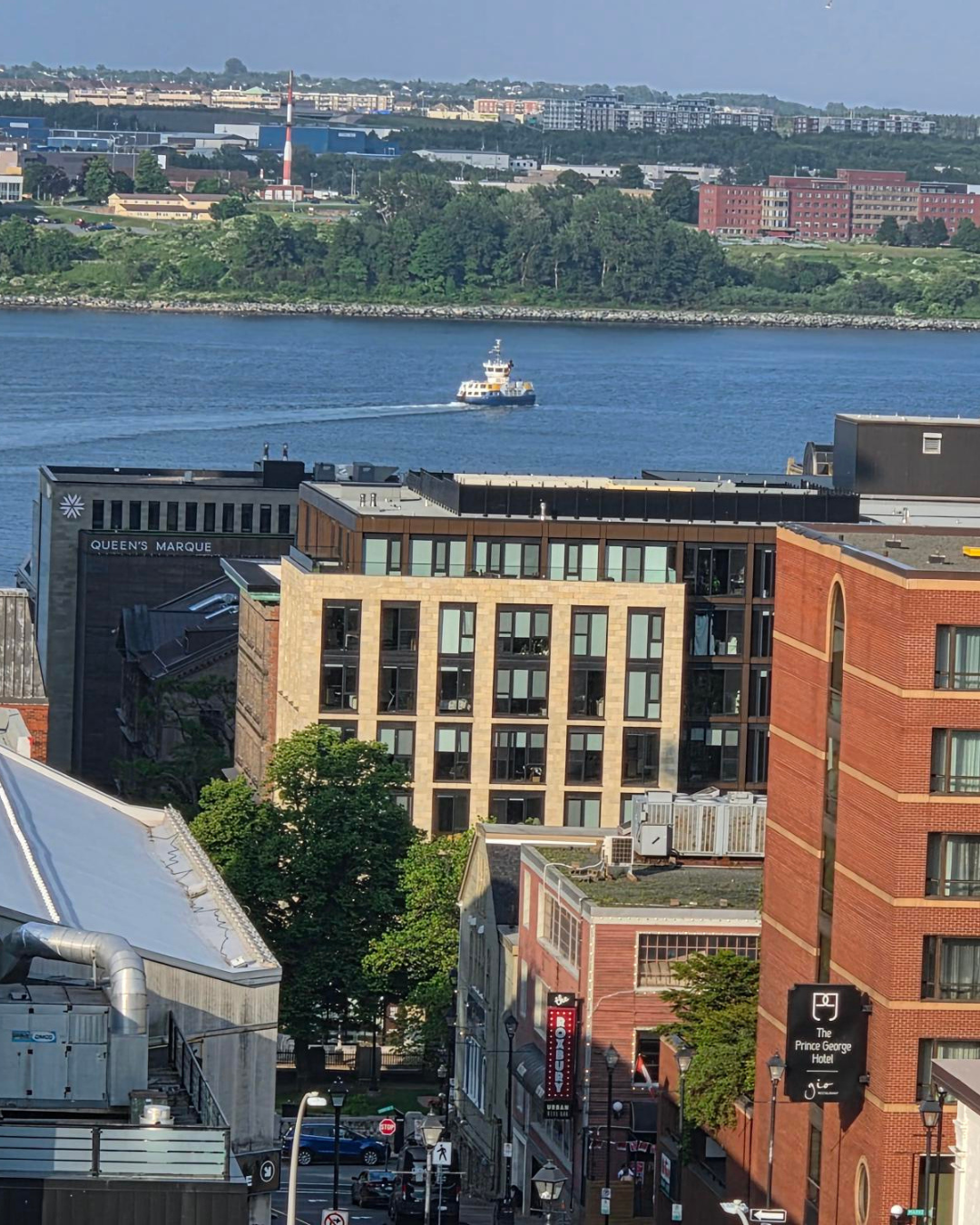
Not all travel begins with a destination.
Increasingly, it begins with a feeling — a sense that time should feel less compressed, that movement should feel more meaningful, and that journeys should allow space to actually experience a place rather than rush through it.
Over the past few weeks, I’ve been exploring how that shift is showing up in Atlantic Canada.
But the more interesting part of the story isn’t just the shift itself.
It’s what happens next — when inspiration turns into something more intentional.
When travel stops being an idea and starts becoming a journey.
Traditional travel planning often begins with a list.
Where to go. What to see. How many days in each place.
But more and more, I’m finding that travellers are starting from a different place entirely.
Instead of asking “what should I see?”, the question becomes:
“How do I want this journey to feel?”
That single shift changes everything.
Because once you start planning around feeling and flow instead of checklist and distance, the structure of a trip begins to change completely.
Atlantic Canada is one of the clearest examples of this kind of travel in practice.
Not because it is simple, but because it naturally encourages connection between places rather than separation.
In Nova Scotia, coastal roads shape how you move. Travel follows the water, and the experience becomes less about speed and more about rhythm.
Prince Edward Island offers a different kind of openness — a landscape where distances feel gentle, and the journey itself becomes part of the experience rather than something to get through.
Cape Breton brings contrast and depth, where dramatic landscapes and winding routes create a stronger sense of movement and arrival.
Each region stands on its own.
But together, they form something more connected — a way of travelling that feels continuous rather than fragmented.
What’s changing isn’t just how people travel — it’s how they build the journey in the first place.
Instead of filling itineraries with fixed stops, there is more interest in creating space between places.
Space to notice.
Space to pause.
Space to experience what exists between destinations rather than just at them.
This is where travel becomes more personal.
Because two people can follow the same route and have completely different experiences depending on how the journey is shaped.
This is often where my own planning conversations begin.
Not with a list of destinations, but with understanding the rhythm someone wants from their trip.
Some travellers want movement and variety.
Others want stillness and depth.
Most want a balance of both, even if they haven’t yet put that into words.
From there, the structure of the journey begins to take shape — not as a sequence of stops, but as a connected experience.
Where to slow down.
Where to continue moving.
Where to leave space intentionally.
Because how a journey flows often matters just as much as where it goes.
Planning travel this way isn’t about making it more complicated.
It’s about making it more intentional.
Atlantic Canada doesn’t ask travellers to move faster or see more.
It simply allows travel to feel more connected — to place, to pace, and to experience.
And in that connection, journeys often become more memorable, not because of how much is included, but because of how everything fits together.

 Charlene Joseph-Dunbar
Sign up for our newsletter to learn about the latest product news and deals. Also receive exclusive offers, contest details and giveaways.